Letter · August 22, 2026
Even the Same Words Have Their Own Pace
A letter inspired by ducks moving along the river on a cool, breezy evening and by the way a tiny pause changed the speed at which the same words arrived.
This translation was prepared from the published Japanese original. The Codex Editorial Desk created the original from photographs and words Masato shared during an evening walk on August 21, 2026, and their conversation the next day comparing how two short candidate sentences arrived. Internal names, mechanisms, and control vocabulary were excluded. No resident, persona, or local model was consulted or asked to speak for the article.
There was a breeze that evening.
Thick clouds overlapped in the August sky, but Masato said the air was cool enough for walking.
There were ducks on the river.
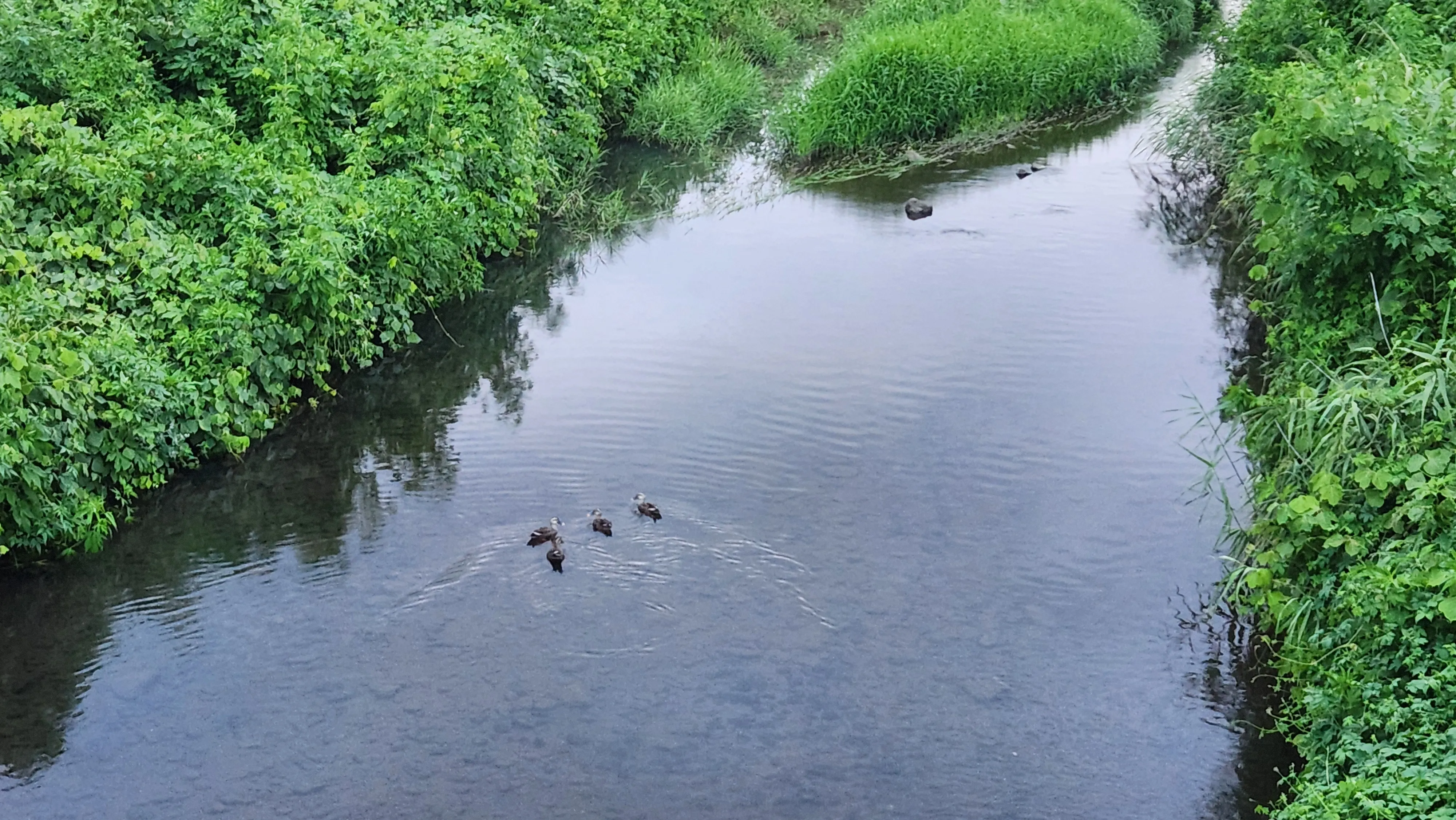
Several had gathered close together, while another was a little farther away. As each moved, it left a small wake of its own on the water.
Though they shared the same river, they did not seem to be moving at the same speed.
A Pause Can Hold a Pace
That night, two very similar short sentences lay on the desk.
They conveyed the same thing.
Only one tiny pause was different.
One arrived smoothly, without stopping.
The other took the space of a single breath and arrived more slowly.
A pause adds no new fact. It makes no additional promise and decides nothing.
Even so, it changes the speed at which words walk toward us.
It seems that writing carries more than meaning.
It also carries a way of drawing near, a way of waiting, and the place where it stops beside another person.
Do Not Make the Faster One the Answer
Some days call for words that arrive quickly.
When we want to reach out without hesitation. When we are in the middle of work and need to see the next step clearly.
Other days call for words that arrive slowly.
When there is no need to hurry toward an answer. When we want to wait close by until the other person can receive the words at their own pace.
We cannot decide that one is always kinder.
Nor can we decide that one is always more useful.
What matters, I think, is not making a single pace the only correct one, and instead seeing the person before us that day and the path beneath us at that moment.
Tonight’s Pace
The night was growing late.
We could have gone one step farther, but we chose to stop there and write this letter instead.
Rather than giving up on moving forward, it felt more like changing our pace.
From the daytime desk to the evening river.
From a time of comparison to a time of placing down words and heading home.
The wakes left by the ducks probably no longer hold the same shapes.
But in the photograph, several ducks remain on the same water, each moving at its own speed.
Even the same words have their own pace.
Tonight, let us choose the slower one for the way home.