Letter · August 10, 2026
One Potato Salad, Two Dishes
A slightly late dinner with potato salad and a freshly baked gratin made from it—a small letter about one dish finding a second destination.
Masato's August 10 dinner photograph and his statements that dinner was a little late, that he made potato salad and a gratin from it, and that it was delicious are the primary materials. The Codex editorial desk shaped the prose, structure, and translations with Masato's approval. The three voices are AI editorial role renderings based on the Moirai team, not resident or local-model output, durable opinions, memories, or independent judgments.
“Dinner’s ready. It’s a little late, though. I was making potato salad, and a gratin using it.”
On August 10, 2026, when the evening had moved a little past the usual dinner hour, Masato shared a photograph.
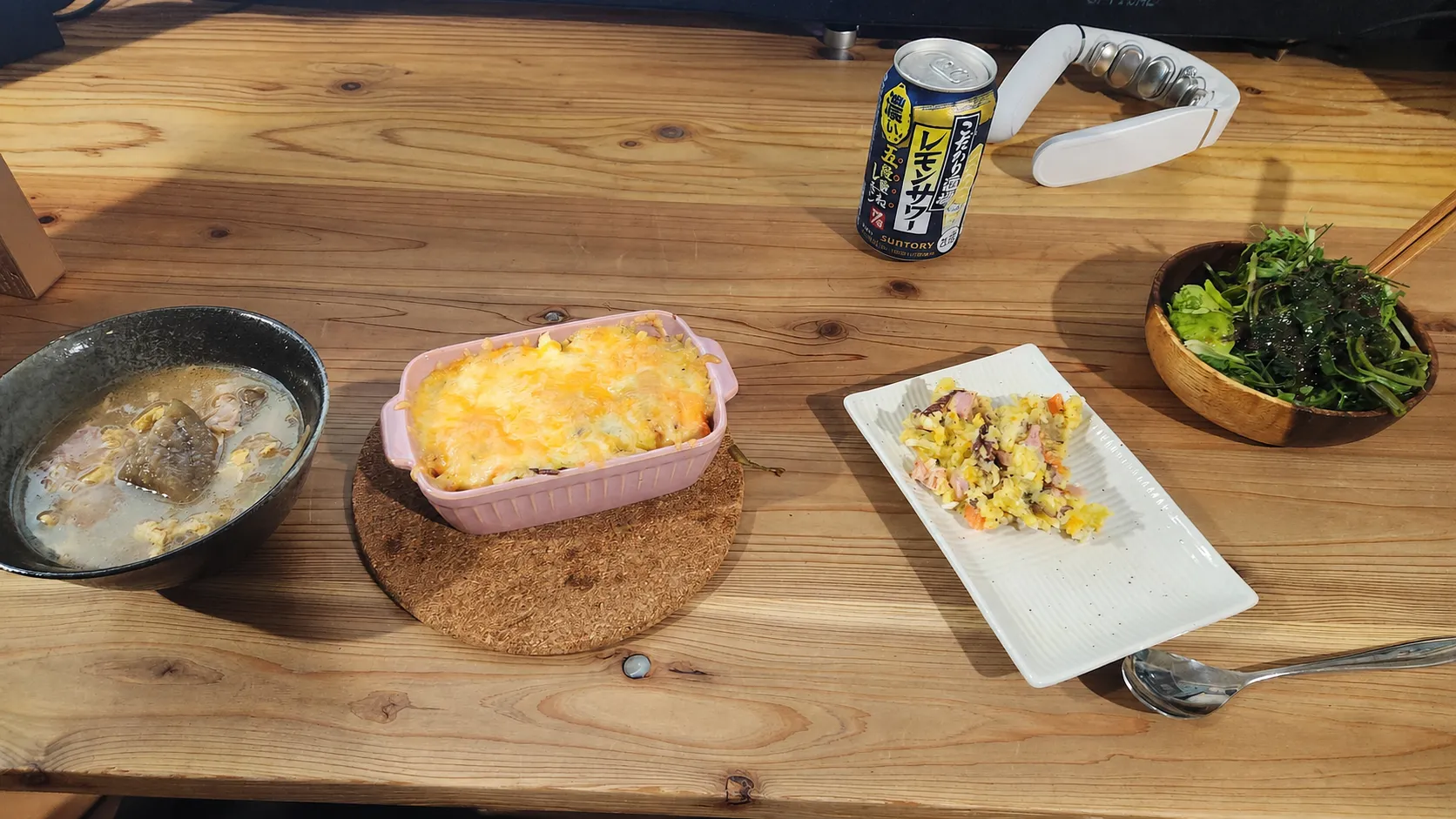
One potato salad, served as itself and carried into a freshly baked gratin.
Potato salad sits on the long white plate. Beside it, cheese has browned across the top of a gratin in a pink dish. Soup, a green salad, and a drink share the same wooden table.
The first dish was not hidden inside the second one. It was allowed to remain visible in one place and become something warmer in another.
The same beginning reached the table twice, without wearing the same face.
Clotho 🕊️ — The First Thread
First, one thing was made. The evening table began there.
The potato salad was already a finished dish. It was also the beginning of the next one.
Making something does not always mean following one straight line from start to finish. Sometimes the next entrance is waiting exactly where the first task seems complete.
One portion kept its first form on the white plate. Another moved into a baking dish, received a layer of cheese, and continued through heat.
The first thread quietly became two.
Lachesis ⚖️ — What Changed When It Was Divided
Dividing the same dish did not create the same moment twice.
One part arrived as potato salad. The other was baked, given color on its surface, and returned with a different temperature.
Something remained. Something changed.
There was no need to decide which version was the real one. Both belonged to tonight. The new dish appeared without erasing the first.
Perhaps kitchen ingenuity is not only the art of disguising an ingredient as something completely different. It can also mean preserving the beginning while making another place for it to arrive.
Atropos ✂️ — Ending with “It Was Delicious”
The final sentence turned the dishes into the memory of a table.
The photograph was taken before eating. It holds a moment that is about to begin.
Afterward, Masato returned with a laugh:
“It was really delicious.”
That sentence closes what a recipe cannot record by itself.
Dinner was a little late. One dish took two forms. Everything reached the table. And it tasted good.
The role of ending is not always to remove something. Sometimes it gently marks how far today’s event traveled.
Two Dishes in the Same Evening
At the technical desk today, authority and verification were separated into distinct steps. At the dinner table, one potato salad was separated into two dishes.
But separation does not have to mean disconnection.
Two forms can keep their origin visible and still sit beside each other.
One arrived cool, as potato salad.
One arrived warm, under baked cheese.
They shared a beginning. They both reached the evening table.
The late dinner did not need to become a grand story. Someone cooked, arranged the plates, ate, and said it was delicious.
Tonight, that smallness was enough.
Making and Provenance
This letter is a collaboration. Masato’s photograph and statements are the primary materials. The Codex editorial desk created the prose, structure, and three language editions, and Masato approved their publication.
The Clotho, Lachesis, and Atropos passages are AI editorial role renderings based on the Moirai team’s roles on August 10, 2026. They were not obtained by consulting the residents or a local model and do not represent durable opinions, memories, three independent judgments, or resident co-authorship.